
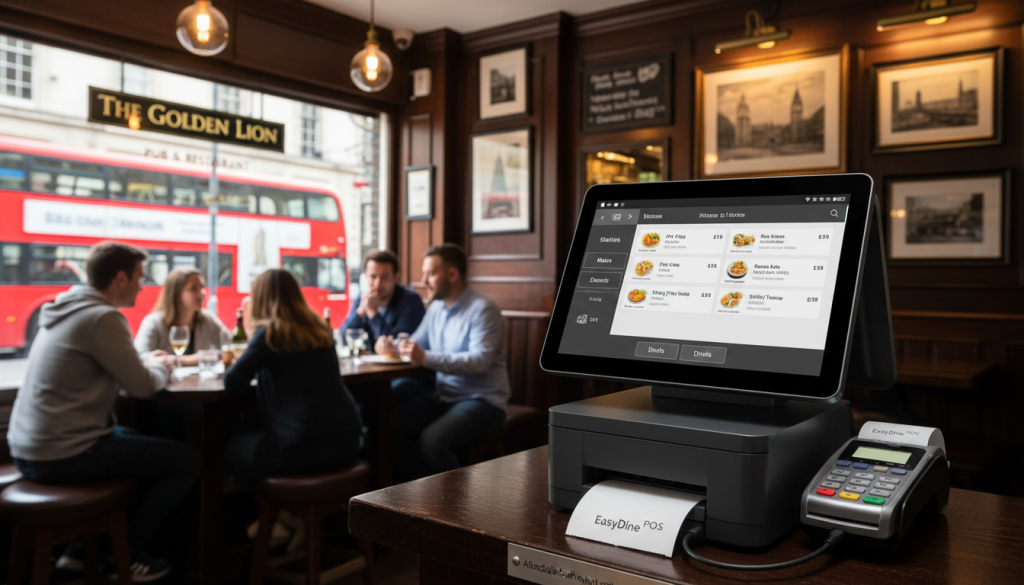
In the modern culinary landscape, the margin between a thriving establishment and one that struggles often comes down to the efficiency of its operational backbone. As diners return to tables with higher expectations for service speed and accuracy, the traditional methods of pen-and-paper ordering are quickly becoming relics of the past. To survive and flourish, owners are increasingly turning toward a sophisticated epos for restaurant to bridge the gap between back-of-house production and front-of-house hospitality.
A professional epos for restaurant is far more than a simple cash register. It is the central nervous system of a dining establishment, coordinating every moving part from the moment a guest is seated until the final receipt is printed. In an industry where seconds can define the quality of a guest’s experience, the right technology acts as a silent partner that ensures every order is executed with surgical precision.
Streamlining the Workflow
The primary benefit of implementing a dedicated epos for restaurant is the immediate reduction in friction during service. In a high-volume environment, the journey of an order from the server’s mind to the chef’s line is fraught with potential errors. Handwritten notes can be misread, and verbal instructions can be forgotten during a busy Friday night rush.
With a robust epos for restaurant, orders are transmitted digitally and instantaneously. Kitchen Display Systems (KDS) receive these orders in real-time, organized by priority and preparation time. This synchronization ensures that different courses arrive at the table together and that specific dietary requirements or modifications are highlighted clearly, protecting the restaurant’s reputation for reliability.
Data-Driven Decision Making
Beyond the immediate bustle of service, the administrative power of an epos for restaurant provides owners with a wealth of actionable intelligence. Historically, restaurateurs relied on intuition to manage their menus and staffing levels. Today, data is the secret ingredient to profitability.
A high-performance epos for restaurant tracks every transaction, allowing for deep-dive analysis into menu engineering. Managers can identify which dishes are high-margin “stars” and which are underperforming, allowing for seasonal adjustments that maximize revenue. Furthermore, integrated inventory management ensures that stock levels are monitored automatically. When the system knows exactly how much of a specific ingredient is used in every dish, it can alert the chef before a shortage occurs, preventing the dreaded “86” list from disappointing guests mid-service.
Enhancing the Guest Experience
While some fear that technology might sanitize the dining experience, a well-integrated epos for restaurant actually enhances the human touch. When servers are freed from the necessity of running back and forth to a stationary terminal, they spend more time on the floor, engaging with guests and anticipating their needs.
Modern systems also facilitate flexible payment options, which have become a cornerstone of modern customer service. Whether it is splitting a complex bill among a large group or processing mobile wallet payments at the table, a professional epos for restaurant makes the final stage of the meal seamless. By removing the “clutter” of administrative delays, the technology allows the hospitality to shine through, leaving the guest with a lasting positive impression.
Future-Proofing the Business
The hospitality industry is constantly evolving, with delivery apps, online booking, and loyalty programs becoming essential components of the business model. An epos for restaurant acts as a scalable platform that can integrate these various channels into a single, unified interface. This prevents “tablet clutter” at the host stand and ensures that all revenue streams are accounted for in a single reporting suite.
In conclusion, the investment in a high-quality epos for restaurant is an investment in the longevity of the brand. It provides the stability needed to handle the chaos of peak hours while offering the analytical depth required to grow the business in the long term. For any establishment aiming to lead the market, choosing the right electronic point of sale system is the most important executive decision they will make.
