
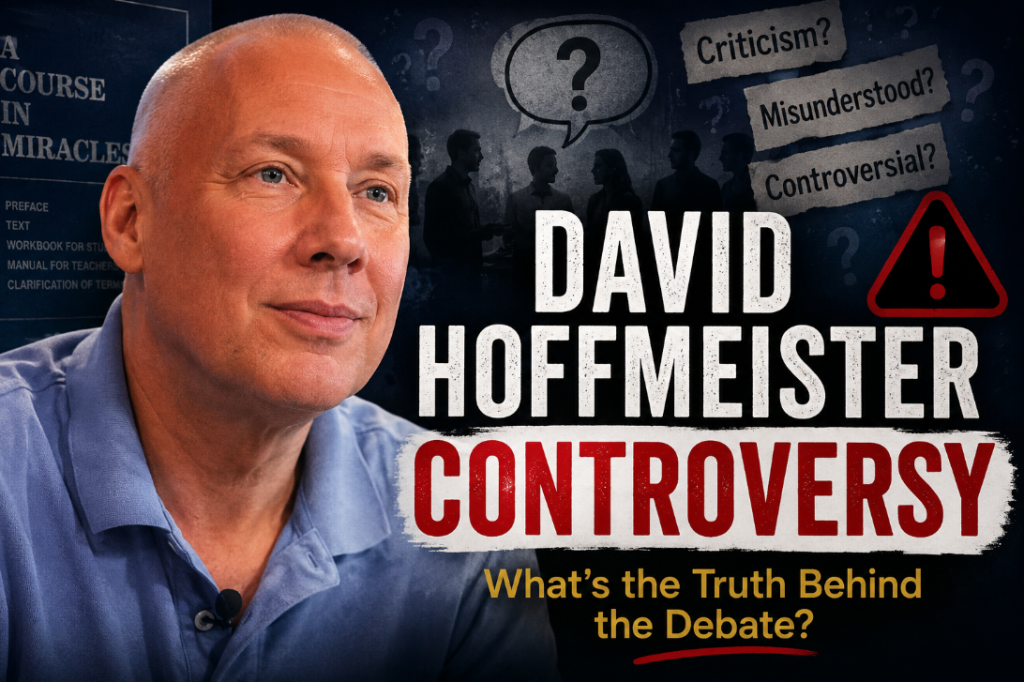
The topic david hoffmeister controversy is frequently seen in online discussions where users react to short posts, comments, and fragmented interpretations of spiritual teachings. David Hoffmeister, associated with A Course in Miracles (ACIM), teaches concepts based on forgiveness, perception, and non-dual awareness.
In most cases, the word “controversy” does not point to any verified issue. Instead, it arises from loss of context, comment-based interpretation, and fragmented information sharing in online communities.
📊 Context-Based Interpretation Framework
| Factor | Impact on Understanding |
|---|---|
| Full teachings | Clear meaning |
| Short quotes | Partial meaning |
| Comments | Subjective interpretation |
| Screenshots | Fragmented context |
| Reposts | Distorted meaning |
🧠 How Context Loss Creates Misunderstanding
One of the main reasons for confusion is loss of original context.
1. Fragmented Content
Online users often see:
- short quotes
- clipped videos
- summarized posts
These do not include full explanation.
2. Isolated Statements
A single sentence taken out of a full teaching can:
- change meaning
- create confusion
- lead to misinterpretation
3. Missing Background
Without background understanding:
- philosophical meaning becomes unclear
- symbolic language is misunderstood
- intent is misread
🌐 Role of Comment-Based Interpretation
In community discussions, comments heavily influence perception.
1. Opinion Amplification
A single strong opinion can influence others.
2. Repetition Effect
Repeated claims start feeling like facts.
3. Emotional Reaction Spread
Emotional comments spread faster than neutral explanations.
📌 Why “Controversy” Appears in This Context
The keyword david hoffmeister controversy appears mainly because:
1. Misinterpreted Quotes
Short excerpts are misunderstood without full context.
2. Opinion Chains
One comment leads to another reactive comment.
3. Information Fragmentation
Content is shared in incomplete forms.
🧩 Supportive Interpretation Pattern
Some users who access full teachings often report:
- clearer understanding of ideas
- appreciation of forgiveness concepts
- interest in deeper philosophical meaning
- emotional calm from context-based reading
📌 Critical or Confused Interpretation Pattern
Others who rely on fragmented content may experience:
- misunderstanding of concepts
- confusion about meaning
- disagreement based on partial information
- skepticism due to lack of clarity
📊 Context vs Fragmentation Table
| Source Type | Understanding Level |
|---|---|
| Full teaching | High clarity |
| Partial quote | Medium clarity |
| Comment thread | Low clarity |
| Viral repost | High distortion risk |
🌍 Online Information Flow Dynamics
Modern platforms influence interpretation through:
1. Fast Sharing
Content spreads quickly without verification.
2. Content Editing
Original meaning may be shortened or changed.
3. Reinterpretation
Each user adds personal meaning.
🧠 Key Analytical Insight
Misunderstanding often comes from how information is consumed, not from the teaching itself.
- Context loss changes meaning
- Comments shape perception
- Fragmented exposure creates confusion
📌 Important Understanding
In most online discussions, teachings are treated as:
- short statements
- opinion triggers
- discussion points
rather than complete philosophical systems.
❓ FAQ
1. Why do misunderstandings happen online?
Because content is often consumed without full context.
2. Do comments affect perception?
Yes, they strongly influence interpretation.
3. Is short content reliable for understanding teachings?
Not fully, because context is missing.
4. Why do opinions differ?
Because each person interprets partial information differently.
5. Is there real controversy behind it?
No verified factual controversy exists.
